The right sofa design starts with the room, not the showroom: measure the space and the doorways, choose a shape that fits how you sit and entertain, then pick a frame and fabric that cope with Ghana’s heat and humidity. A well made frame with a cover you can replace will outlast several cheaper sofas.
At a glance
- Measure the wall, the room and every doorway and stair the sofa has to pass through.
- L-shaped and sectional sofas seat the most people; a three seater with armchairs is the most flexible.
- Seasoned hardwood, steel and cane frames last longest, as long as the joints are well made.
- Breathable, tightly woven fabrics stay comfortable and wear well in humid weather.
- Sofa chairs can match the sofa or contrast with it, as long as the seat heights line up.
What are the main sofa designs?
The main sofa designs are the three seater, the two seater, the L-shaped corner sofa, the modular sectional, the sofa bed and the single sofa chair, and each suits a different room and household.
| Design | Seats | Best for | Watch out for |
|---|---|---|---|
| Three seater | 3 | Most living rooms, often paired with armchairs | The middle seat is often the least comfortable |
| Two seater or loveseat | 2 | Small rooms, bedrooms and studies | Limited seating when guests arrive |
| L-shaped corner sofa | 4 to 6 | Family rooms and corners of open plan spaces | Made left or right handed, and harder to move to another room |
| Modular sectional | Flexible | Households that like to change the layout | Sections can drift apart unless they clip together |
| Sofa bed | 2 to 3, plus a bed | Guest rooms and smaller flats | The mattress is rarely as comfortable as a real bed |
| Single sofa chair | 1 | Adding seats, reading corners, bedrooms | Needs to suit the main sofa in height and style |
In many Ghanaian homes the living room receives visitors as well as the family, so seating capacity matters. A three seater with two armchairs, or a corner sofa with one chair, usually gives enough seats without filling the room.
How do you choose the right size sofa?
Choose a sofa about two thirds the length of the wall it sits against, leave about 45 cm to the coffee table and 75 to 90 cm for walkways, and check it will fit through every door on the way in.
- Measure the route in: doorways, corridors, stairs and tight corners stop more sofas than room size does. A made to measure sofa can be built in sections if access is tight.
- Think about seat depth: deep seats are good for lounging, while a shallower seat with a firm cushion is easier for older relatives to get in and out of. A seat height of around 45 cm suits most people.
- Watch the arms: wide, rolled arms can add 30 cm or more to a sofa’s width without adding any seating. Slim arms keep a small room open.
- Mark it out: outline the sofa on the floor with tape or newspaper for a day before you buy or commission it, and walk around it.
Which sofa frame lasts longest?
Frames made from properly seasoned hardwood or welded steel, with strong joints, last longest, while softwood, chipboard and stapled joints are usually the first to fail.
- Hardwood: timber that has been properly dried stays straight in humid weather. Look for joints that are dowelled, glued and screwed rather than stapled. In Ghana, check the timber is naturally resistant or treated against termites.
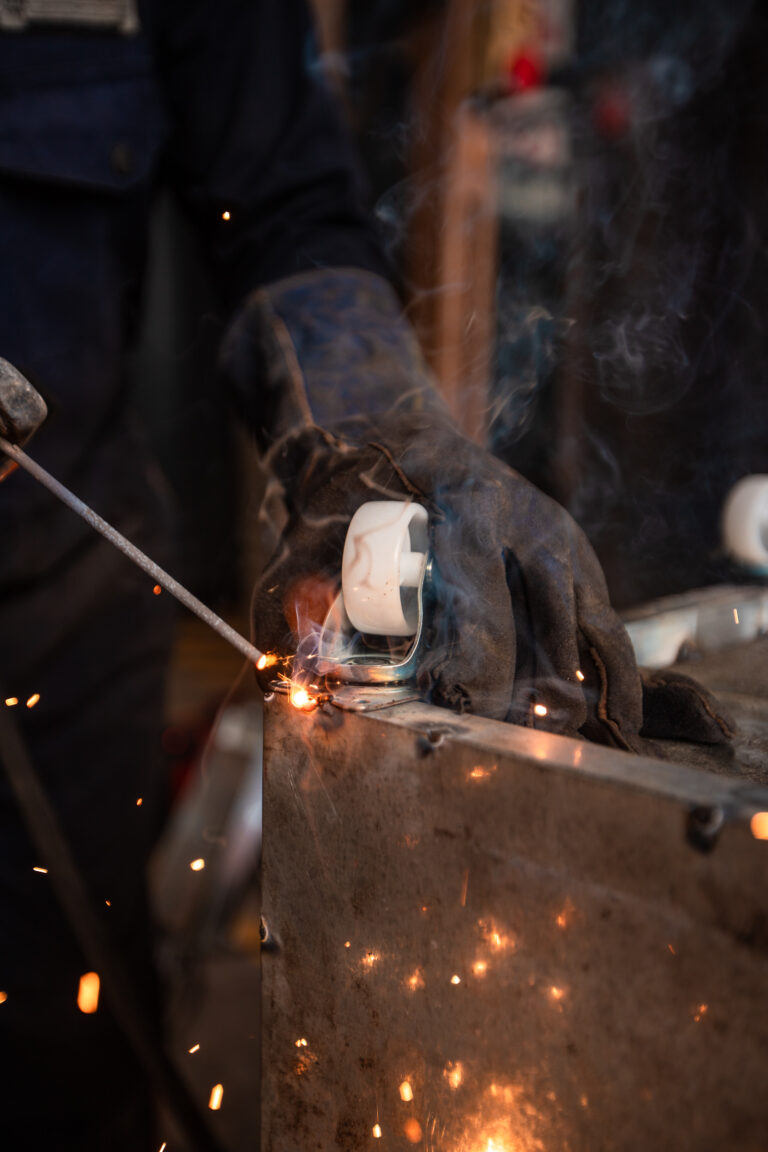
- Steel and wrought iron: a welded metal frame cannot be eaten by termites, does not warp, and can be repaired and refinished if it is ever damaged. Our wrought iron furniture guide explains why forged frames last so long.
- Cane and rattan: light, airy and well suited to verandas. Check the bindings at the joints, which take the most wear.
- What is inside: webbing or springs support the cushions. Sprung seats keep their shape longer, and high density foam wrapped in fibre stays comfortable longer than soft, cheap foam.
Which sofa fabric suits Ghana’s climate?
Breathable cotton and linen blends are the most comfortable in Ghana’s heat, tightly woven fabrics wear and resist stains best, and leather suits rooms that are air conditioned.
Fabric sellers will rarely quote a technical wear rating, so judge durability by hand before you buy:
- Hold it to the light: a tight weave with no visible gaps lasts far longer than a loose, open one.
- Rub it hard: rub the fabric firmly with your thumb for about 20 seconds. If it goes fuzzy or starts to pill, it will bobble on a sofa within months.
- Pull it gently: stretch it across the weave. Threads that slide apart or a weave that distorts will not hold up on a seat.
- Turn it over: a backing layer on the reverse adds strength and helps the fabric keep its shape.
How do you choose a sofa chair design to match your sofa?
Choose a sofa chair design that either matches the sofa for a formal look or contrasts with it in colour or material for a relaxed one, keeping the seat height similar so the group sits comfortably together.
| Chair design | What it looks like | Pairs well with |
|---|---|---|
| Club chair | Low, deep and fully upholstered, with wide arms | A large, comfortable three seater |
| Wingback | A tall back with side wings around the head | Traditional sofas, or as a single statement chair by a window |
| Slipper chair | Armless, low and compact | Small rooms where an extra seat must not block the way |
| Cane or rattan chair | An open woven frame with a seat cushion | Relaxed rooms and verandas, beside a fabric sofa |
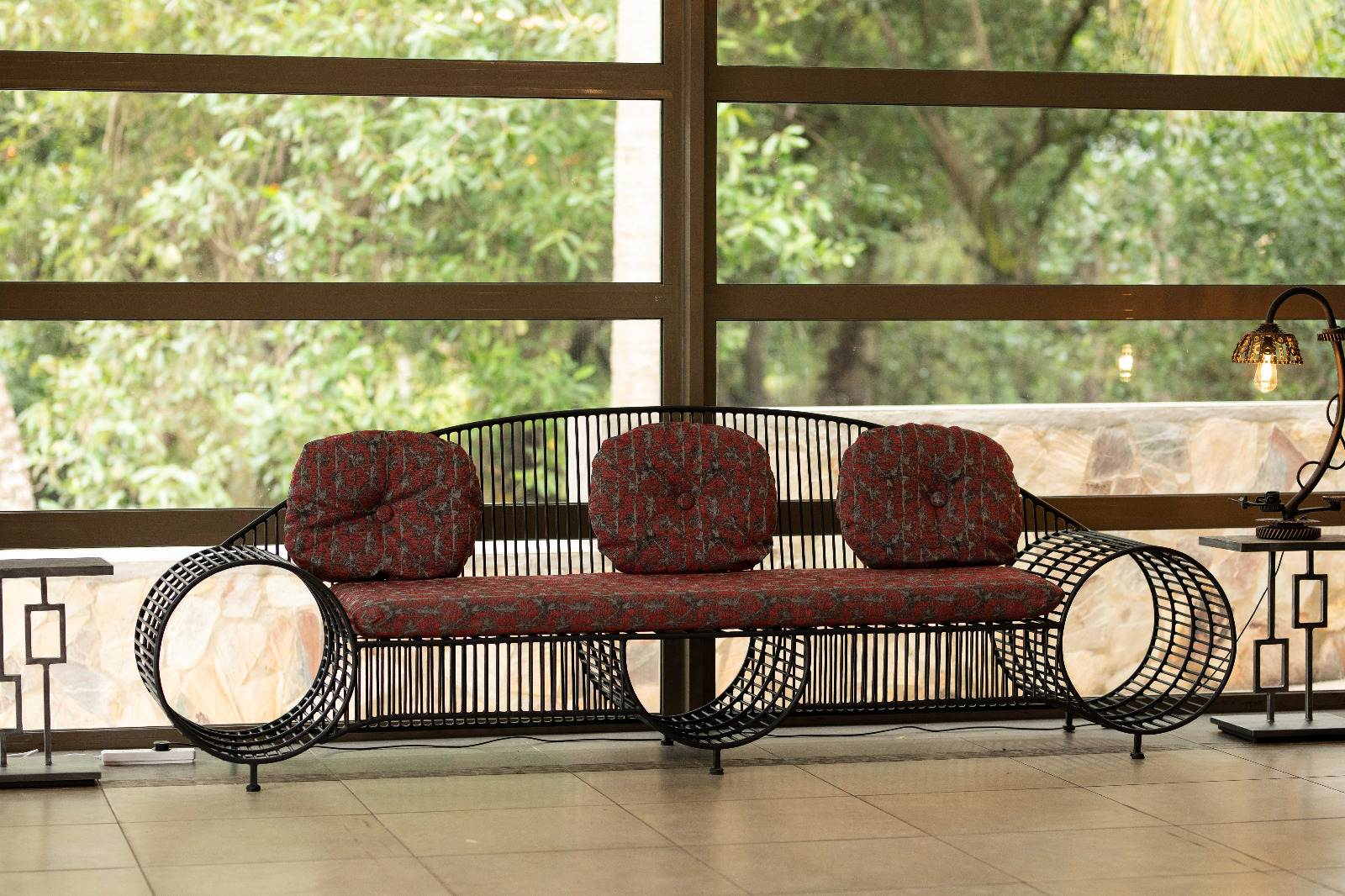
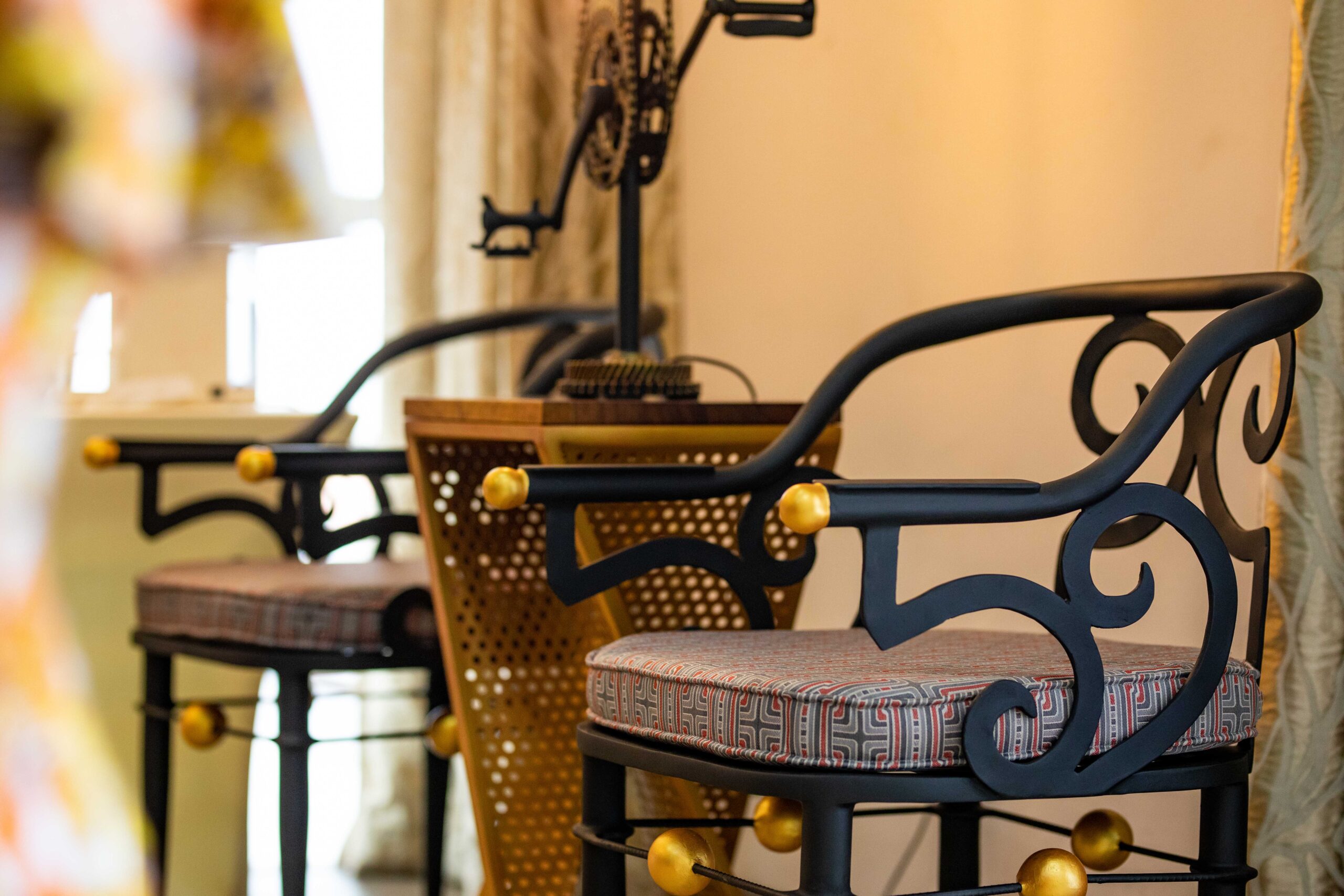
| Iron framed chair | A forged or welded metal frame with cushions | Metal and wood interiors, and as a contrast to a plain sofa |
- Matching: a three seater, a two seater and a chair in one fabric gives a calm, formal room, and a matching sofa set is still the most common choice in Ghana.
- Contrasting: an armchair in a different fabric, or with an iron, timber or cane frame, adds character without clashing.
- Angle for conversation: turn chairs slightly towards the sofa, close enough that people can talk without raising their voices.
Should you choose a bespoke or ready-made sofa?
Choose a bespoke sofa when the room is an awkward size, when you want a particular frame or fabric, or when you want it to last for decades; choose ready-made when budget and speed matter most.
| Bespoke | Ready-made | |
|---|---|---|
| Size | Made to the exact space, and to fit through your doors | Standard sizes only |
| Frame and materials | You choose the frame, the filling and the fabric | Frame quality is often hidden |
| Time | Takes time to design and make | Available straight away |
| Cost | Usually higher at the start | Usually lower at the start |
| Lifespan | Built to be reupholstered and kept | Varies widely |
Our bespoke furniture made in Accra is designed for the room it goes into, in wrought iron, exotic hardwoods, cane and glass.
How do you look after a sofa in Ghana’s climate?
Keep a sofa out of direct sun, brush or vacuum off dust regularly, turn and plump the cushions, deal with spills straight away and keep timber frames protected from termites.
- Sun: strong sunlight through a window fades fabric and dries out leather, so use a curtain or blind in the hottest hours.
- Dust: during the harmattan, vacuum or brush the sofa every week so grit does not wear the fabric.
- Cushions: turn and swap seat cushions so they wear evenly.
- Damp: let air circulate around the sofa in the rainy season to stop mildew.
- When the cover wears out: if the frame is still solid, you can reupholster an existing sofa rather than replace it.
How Accents & Art makes furniture
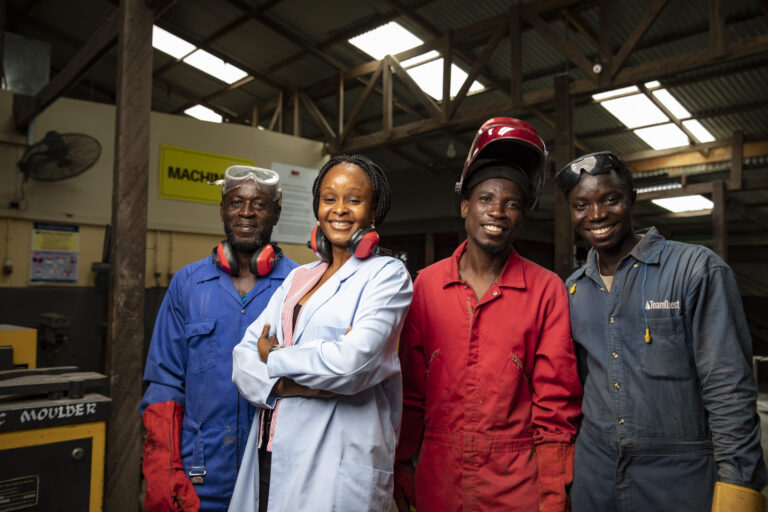
Our furniture is designed and made in our Bubuashie workshop by the same team that builds our balustrades and metalwork.
Our designers work alongside our own welders, woodworkers and finishers, which means a dining table base, a bench or a forged iron sofa like the one above can be drawn to your measurements and made for the room. The metal frames come from the same metal fabrication workshop as our gates and staircases, and you can see the wider service on our interior design page.
Frequently asked questions
What is the best sofa design for a small living room?
The best sofa design for a small living room is a two seater or a compact three seater on raised legs, because seeing the floor beneath it makes the room feel larger. An armless or slim arm design saves width, and a sofa bed earns its place if relatives often stay the night.
Which sofa design is best for a family with children?
The best sofa design for a family with children has a sturdy hardwood or steel frame, removable covers that can be washed, and a tightly woven fabric in a mid tone. Rounded arms and corners are kinder to small heads, and firm seat cushions hold their shape when children climb and bounce.
What colour sofa hides dirt best?
The colour of sofa that hides dirt best is a mid tone, such as grey, taupe, olive, rust or a muted blue, ideally in a fabric with a slight texture or pattern. Very pale sofas show every mark and harmattan dust, while very dark ones show lint and fade in the sun.
How long should a good sofa last?
A good sofa with a well made hardwood or steel frame should last well over a decade and can be reupholstered more than once, because the frame and springs decide its life, not the fabric. A cheap frame of softwood or chipboard may sag or break within a few years.
If you want furniture made for your living room, tell us about the space, the seating you need and the look you are after.