What is rusting? It is the slow chemical reaction in which iron and steel combine with oxygen and water to form iron oxide, the flaky reddish brown layer we call rust. It needs both water and oxygen, it speeds up with salt and heat, and it can be stopped by keeping water and air away from the metal with good preparation and a sound finish.
At a glance
- Rust forms only when iron or steel meets oxygen and water at the same time.
- Salt, from sea air or anywhere else, makes rusting happen much faster.
- Rust is weaker and bulkier than the metal it replaces, so it flakes away and lets the attack continue.
- The defence is a barrier: careful surface preparation, a rust inhibiting primer, and a durable topcoat.
- Small chips left untreated let rust creep under the paint, so regular checks matter.
What is rusting? A one minute summary
Rusting is the corrosion of iron and steel, in which the metal reacts with oxygen and water to form hydrated iron(III) oxide, known as rust.
| Rusting in one minute | |
|---|---|
| Word equation | iron + oxygen + water gives hydrated iron(III) oxide (rust) |
| Symbol equation | 4Fe + 3O2 + 2xH2O gives 2Fe2O3.xH2O |
| Conditions | Both water and oxygen must be present. Salt, acids and heat make it faster. |
| Type of reaction | A chemical change and an oxidation reaction: the iron gains oxygen. |
| Which metals | Only iron and alloys containing iron, such as steel. Other metals corrode but do not rust. |
| How to prevent it | Barrier methods (painting, oiling or greasing, plastic or powder coating); galvanising (a zinc coating); sacrificial protection (attaching a more reactive metal such as zinc or magnesium); alloying (stainless steel). |
The classic school experiment shows the conditions clearly. A nail kept in dry air with a drying agent stays bright, and so does a nail in boiled water sealed under a layer of oil, while a nail left in ordinary water open to the air rusts within days.
Rust is also weaker and bulkier than the metal it replaces. It flakes away and lifts paint as it grows, exposing fresh metal underneath, so once rusting starts it keeps going unless it is stopped.
What is the difference between corrosion and rusting?
Corrosion is the general word for any metal being worn away by chemical reaction with its surroundings, while rusting is the specific corrosion of iron and steel.
| Corrosion | Rusting | |
|---|---|---|
| Which metals | All metals, including copper, aluminium, zinc and silver | Only iron and its alloys, such as steel |
| What it looks like | Varies: the green patina on copper, the dull white film on aluminium, tarnish on silver | A reddish brown, flaky layer |
| Does it protect the metal? | Sometimes. The thin oxide layer on aluminium and on stainless steel slows further attack | No. Rust flakes off and lets the attack continue |
So all rusting is corrosion, but not all corrosion is rusting.
Why does metal rust faster in Ghana?
Metal rusts faster along Ghana’s coast because the air is warm, humid and carries salt from the sea, and because the rainy seasons keep surfaces wet for long periods.
- Humidity: coastal cities such as Accra, Tema and Takoradi are humid for much of the year, so metal surfaces are often damp.
- Salt in the air: the closer you are to the sea, the more salt settles on metalwork, and salty moisture carries the reaction along far faster than rain alone.
- Heat: chemical reactions run faster at higher temperatures.
- Two rainy seasons: southern Ghana has a main rainy season around April to June and a shorter one around September to November, so metalwork goes through long wet spells twice a year.
- Trapped water and dirt: bottom rails, joints, hollow tubes and the bases of posts hold water, and dust holds moisture against the surface.
How do you stop metal from rusting?
Stop metal rusting by keeping water and oxygen off it: prepare the surface properly, apply a rust inhibiting primer, finish with a durable topcoat or powder coating, and keep it maintained.
| Method | How it works | Best for |
|---|---|---|
| Primer and paint system | A barrier of coatings, with rust inhibitors in the primer | Large fixed structures, site work and touch ups |
| Powder coating | A thick, hard layer of powder melted and fused onto the metal in an oven | Gates, railings, balustrades and furniture made in a workshop |
| Oil or grease | A thin film that keeps water off the surface | Hinges, bolts, gate rollers and tools, where paint would wear off |
| Galvanising | A zinc coating that corrodes in place of the steel, protecting it even where the coating is scratched | Structural steel and very exposed outdoor steelwork |
| Stainless steel | Chromium in the steel forms a thin, invisible protective layer | Coastal settings and details that need little maintenance |
| Good design | Drain holes, no water traps and nothing sitting in standing water | Every piece of outdoor metalwork |
Galvanising works by sacrificial protection: zinc is more reactive than iron, so where the coating is scratched the zinc corrodes first and the steel underneath is spared. On very exposed steel, galvanising and then powder coating on top, known as a duplex system, gives that sacrificial layer plus a hard wearing finish. For most outdoor gates and railings, our guide to powder coating vs spray painting compares the two most common finishes.

What should you paint on metal to stop rust?
Paint clean, sound metal with a rust inhibiting primer, such as a zinc phosphate or red oxide primer, then finish with at least two coats of a good quality topcoat made for metal.
- The primer does the protecting: zinc phosphate primers contain a pigment that slows rusting wherever moisture gets through the paint. Skipping the primer is the most common reason a paint job fails early.
- The topcoat keeps out the weather: it shields the primer from sun and rain and gives the colour.
- Rust converters have limits: products based on phosphoric or tannic acid turn a thin film of surface rust into a stable layer that can be painted over, but they do not fix heavy, flaking rust, which has to be removed first.
- Follow the tin: drying times between coats matter, and painting in rain or very high humidity traps moisture under the film.
If you would rather have the work done properly once, our page on rust protection and finishing explains how metalwork is prepared and finished for Ghana’s heat, humidity and coastal air.
How do you remove rust and repaint metal?
Remove loose rust back to sound metal, treat any remaining surface rust, then prime and paint the same day before fresh rust can form.
- Clean: wash off dirt, salt and grease, and let the metal dry.
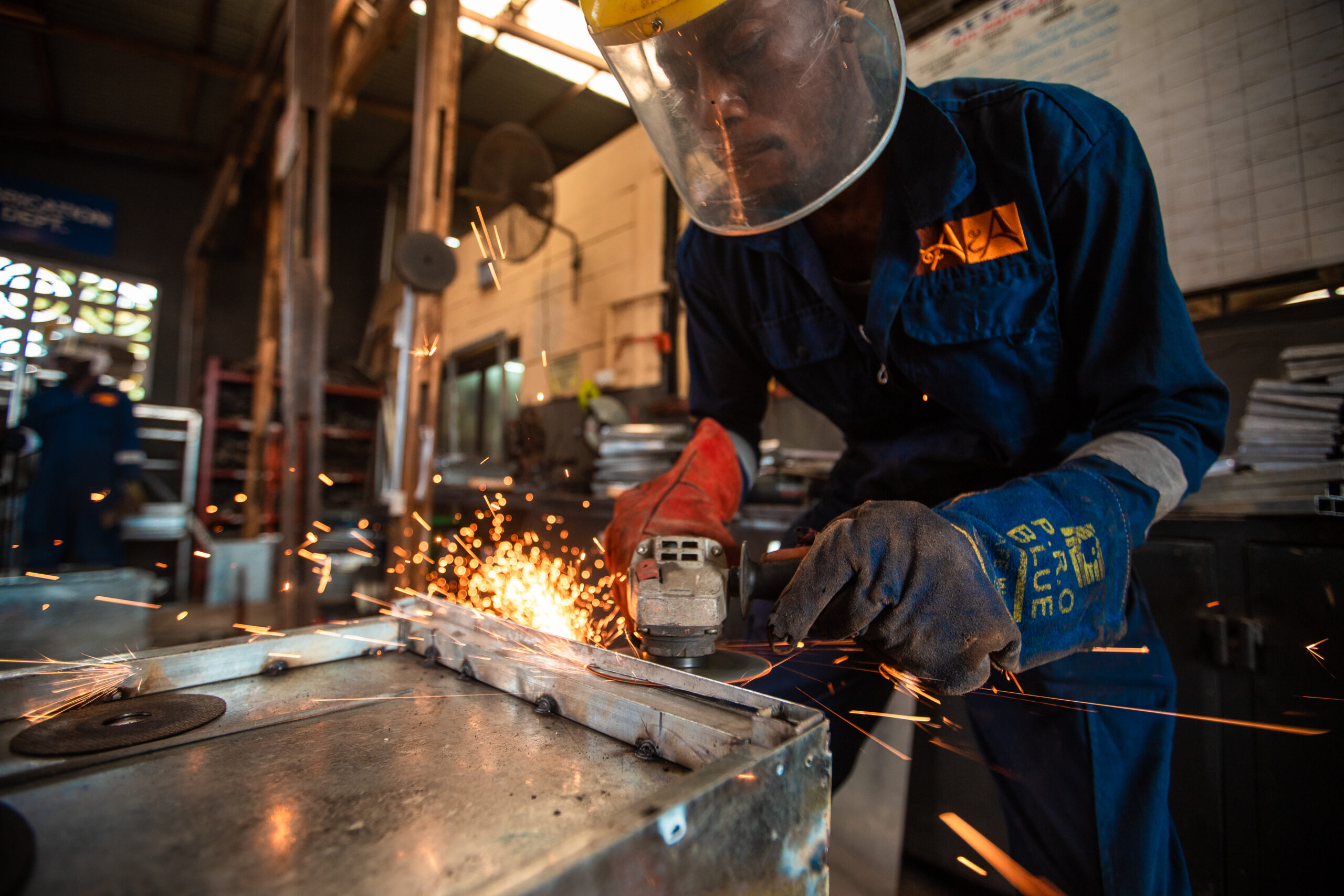
- Remove loose rust and paint: use a wire brush, abrasive paper or a grinder with a flap disc. Heavily rusted pieces are best blasted back to bare metal.
- Treat what remains: a rust converter can deal with light staining left in pits and corners.
- Prime straight away: bare steel starts to rust again within hours in humid air, so prime the same day.
- Topcoat: apply at least two coats, letting each dry properly.
Some rust is beyond a repaint. If it has eaten holes through the metal, weakened a weld or damaged a hinge or fixing, the piece needs repair, especially on gates, balconies and stair railings where safety matters. Rusted furniture can often be saved through our furniture and metalwork refurbishment, and damaged sections of gates and railings can be repaired or replaced by our metal fabrication team.
How do you look after metalwork so it does not rust?
Check outdoor metalwork at least once a year, ideally before the rains, wash off salt and dust, and touch up any chip or scratch before rust can creep under the finish.
- Know where to look: bottom rails, hinges, welds, latches and the points where posts go into concrete are where rust starts first.
- Rinse coastal metalwork: a wash with fresh water now and then removes salt before it does damage.
- Keep water moving: clear drains and tracks, and do not let soil, plants or rubbish pile up against posts and rails.
- Grease moving parts: hinges, rollers and locks last longer with a little grease before each rainy season.
- Keep a touch up pot: ask for a small amount of matching paint when new metalwork is installed, so chips can be sealed straight away.
Indoor iron furniture needs much less attention, as our wrought iron furniture guide explains, but the same rule applies: seal any chip before rust spreads.
How Accents & Art protects metalwork
New metalwork from our Bubuashie workshop is prepared and finished before it is installed, and existing pieces that have started to rust can be treated and refinished.
New gates, railings, balustrades and furniture are cleaned and prepared so the coating bonds properly, then finished with a protective coating chosen for where the piece will live. For existing metalwork, rust repair means stripping the affected area, treating the metal and applying a new protective finish. Our spraying and finishing page explains the process, and our guide to powder coating and spray painting helps you choose between the two.
Frequently asked questions
Is rusting a chemical change?
Rusting is a chemical change, because iron reacts with oxygen and water to form a new substance, hydrated iron(III) oxide, with different properties from the metal. It is also an oxidation reaction, since the iron gains oxygen. Unlike melting or drying, it cannot be reversed by simple physical means.
Can you powder coat over rust?
You cannot powder coat over rust and expect it to last. Powder coating needs clean, bare metal to bond to, so rusted steel is blasted or ground back to bright metal, cleaned and pretreated first. Coating over rust traps it under the finish, where it keeps spreading and soon lifts the coating off in flakes.
Does stainless steel rust?
Stainless steel can rust, but far more slowly than ordinary steel, because chromium in it forms a thin protective layer. Rust spots appear in salty coastal air, on lower grades, or where ordinary steel dust from nearby cutting has settled on the surface. Grade 316 copes with coastal air better than grade 304.
How often should I repaint a metal gate?
Repaint a metal gate fully when the coating starts to peel, flake or fade over wide areas, rather than on a fixed timetable. A gate near the sea reaches that point sooner than one inland. Inspect it every year before the rains and touch up chips straight away, which stretches the time between full refinishes.
If your gate, railings or furniture have started to rust, send us a few photos and we can tell you whether a refinish or a repair is the right fix.