Laser cutting uses a focused, high powered beam to melt or vaporise material right through its thickness, leaving a clean cut edge. Laser engraving uses lower power and controlled depth to remove only a thin surface layer, marking or texturing the material without cutting through it.
At a glance
- Laser cutting separates material fully along a path. Laser engraving only marks the surface.
- Both use the same laser technology; the difference is power, speed, focus and depth.
- Both run from a digital vector file, so the first part and the last part match.
- Engraving works on more materials than cutting, because it does not need to penetrate them.
- Cutting and engraving are often combined on one panel from a single file.
How does laser cutting work?
Laser cutting directs a focused, high powered beam along a programmed path, melting, burning or vaporising the material right through its thickness.
In many setups a jet of assist gas clears molten material from the cut as it forms, which helps produce a clean edge. The beam removes a narrow, consistent width of material, known as the kerf, so the edge is sharp and repeatable from one part to the next.
That precision is what makes laser cutting suit intricate profiles, tight nesting of parts on a sheet and runs where every piece has to match. It is the basis of our laser cutting and engraving service in Accra.
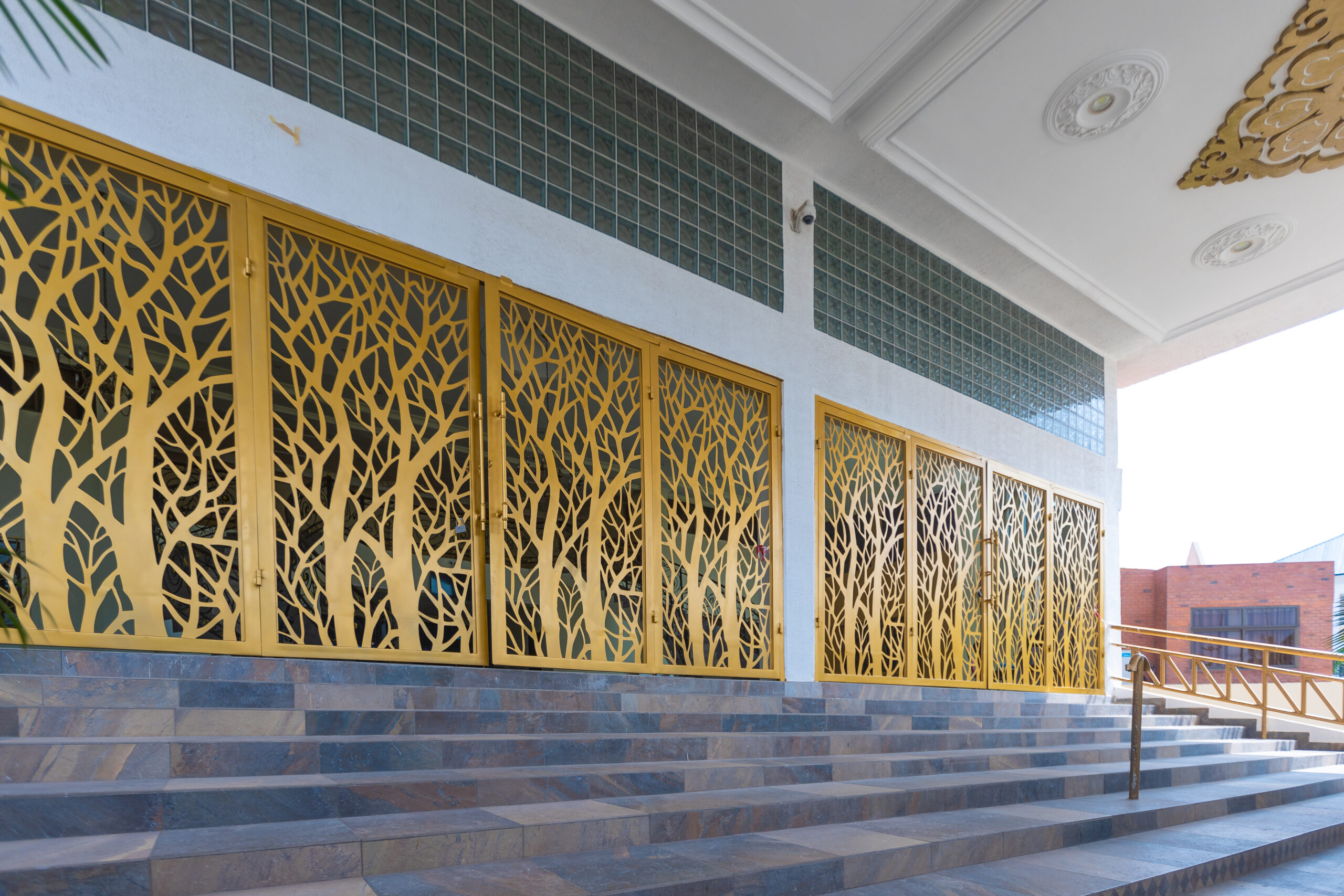
How does laser engraving work?
Laser engraving uses the same technology at lower power, or with a shorter dwell time, to remove only a thin layer from the surface of a material.
Because it does not cut through, engraving has no effect on structural strength. It is a way to add fine surface detail, such as a pattern, texture or motif, without weakening the piece.
| Engraving type | How it works | Best for |
|---|---|---|
| Vector | The beam traces clean lines along a path | Text, outlines and line drawings |
| Raster | The beam builds up a filled area line by line, like a printer | Shaded or more detailed designs |
Laser cutting vs laser engraving: the core difference
The core difference is depth: cutting is calibrated to separate the material completely, and engraving is calibrated to leave a visible mark on the surface.
| Laser cutting | Laser engraving | |
|---|---|---|
| What it does | Cuts right through the material | Removes a thin surface layer |
| Power | High | Lower, or shorter dwell time |
| Effect on strength | Removes material, so support needs planning | None |
| Result | A clean, separated profile | A pattern, texture or mark |
| Typical uses | Screens, panels, cut-outs, lettering | Motifs, numbers, surface detail |
Because the technology is shared, many machines switch between the two by adjusting power, speed and focus, which is why cutting and engraving are so often used together in one design.
How is a laser cutting or engraving job set up?
Every laser job starts from a digital vector file that defines each line to cut and each area to engrave.
- The vector file is loaded into the machine software.
- Material specific settings, such as power and speed, are selected.
- The material is positioned and secured on the bed.
- The laser follows the programmed path.
Because the process is file driven rather than hand guided, a design can run once for a single piece or repeat across a full sheet with no change in accuracy. A single sample can also be tested before a full production run is committed.
Which materials suit laser cutting and engraving?
Laser cutting suits sheet materials that can be cut cleanly through, while engraving works on a wider range because it only marks the surface.
- Laser cutting: sheet metal, wood, acrylic and certain plastics. Denser or more reflective metals need more power and closer control.
- Laser engraving: metal, wood, glass and leather. Each responds differently, with a colour change, a textured mark or a shallow groove.
Reflectivity, thickness and how a material reacts to heat all matter, so material choice and laser settings are worked out together.
What should you consider when specifying either process?
Plan the design around the process from the start, because cutting raises structural questions and engraving raises questions of contrast.
- For cutting: very fine, unsupported sections can be fragile once separated from the sheet, so a perforated screen usually needs a supporting frame or a pattern that leaves enough connected material.
- For engraving: very fine detail can lose definition on a coarse or uneven surface, while a bolder pattern reads clearly across more materials and finishes.
- For volume: nesting many parts on one sheet reduces waste and keeps a large specification cost effective.
Where is laser cut and engraved metalwork used?
Laser cutting and engraving turn up wherever architectural and interior metalwork needs a precise, repeatable pattern.
- Perforated screens and privacy panels
- Balustrade infill and decorative room dividers
- Signage lettering and house numbers
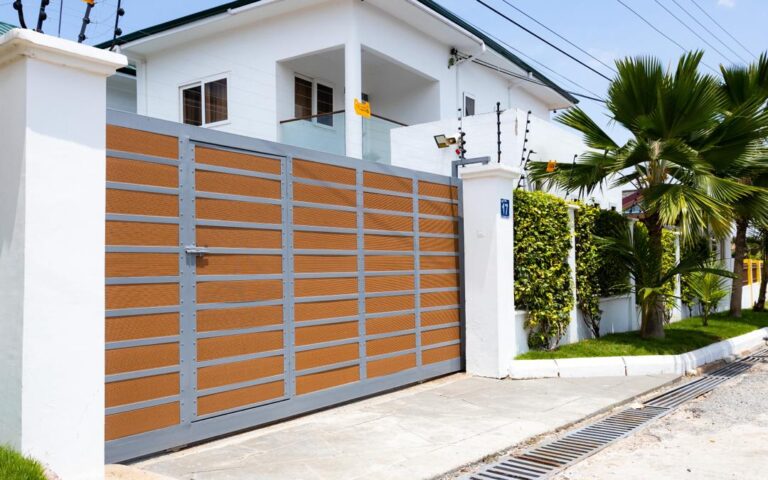
- Gates with cut or engraved motifs
- Wall lights and cladding with cut-out patterns
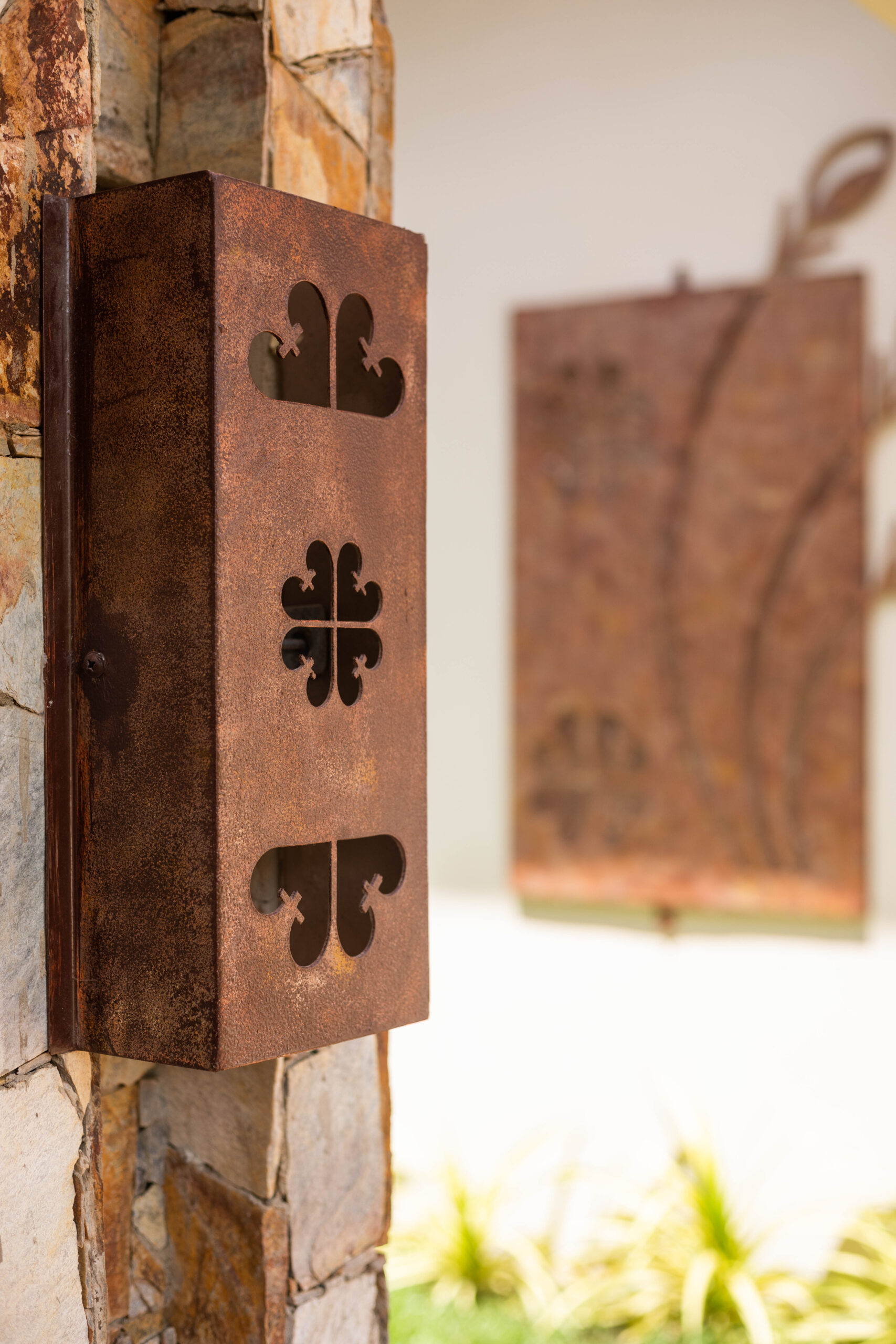
Cut parts are often then formed and assembled. Our guide to CNC bending and forming explains the next step for sheet metal parts.
How Accents & Art handles laser cut and engraved work
At Accents & Art, laser cutting and engraving sit inside one in-house process that runs from concept and CAD design through fabrication, finishing and installation, in our workshop in Accra, Ghana.
The same drawing that defines the cut and engraved areas guides how a panel is framed, finished and fitted, so one team is accountable for the result from file to installation.
Frequently asked questions
What is the difference between laser cutting and laser engraving?
Laser cutting uses a high powered beam to cut right through a material and separate it along a path. Laser engraving uses lower power to remove only a thin surface layer, marking the material without cutting through it.
Can the same machine cut and engrave?
Often, yes. Both use the same laser technology, so many machines switch between cutting and engraving by adjusting power, speed and focus. That is why one file can specify where a panel is cut and where it is only marked.
Does laser engraving weaken metal?
No. Engraving only removes a thin surface layer, so it has no effect on the structural strength of the piece. Cutting does remove material, which is why cut panels need their support planned at the design stage.
Which materials can be laser engraved?
Metal, wood, glass and leather can all be engraved. Each material reacts differently, producing a colour change, a textured mark or a shallow groove, so the settings are matched to the material.
If you are specifying laser cut or engraved elements for a project, start a commission and tell us what the design needs.