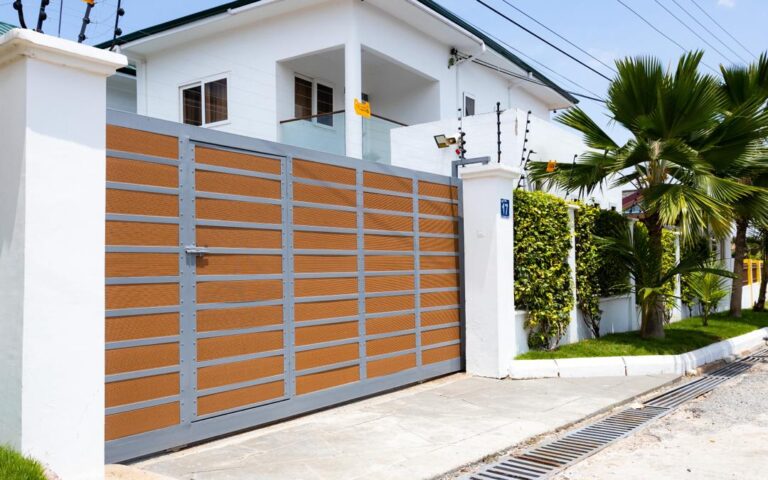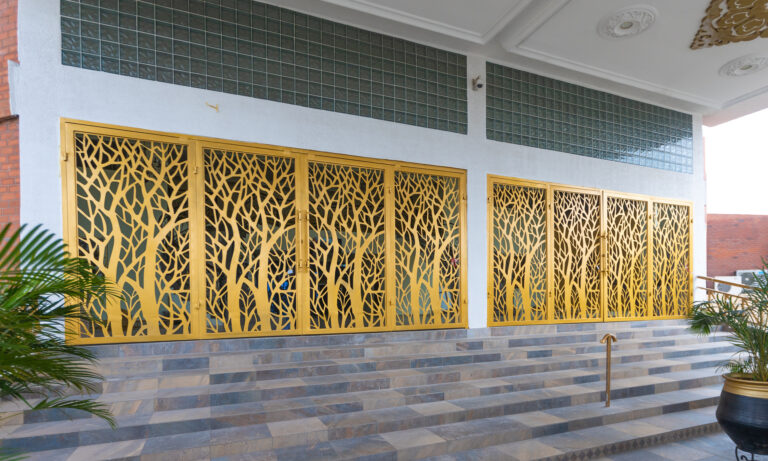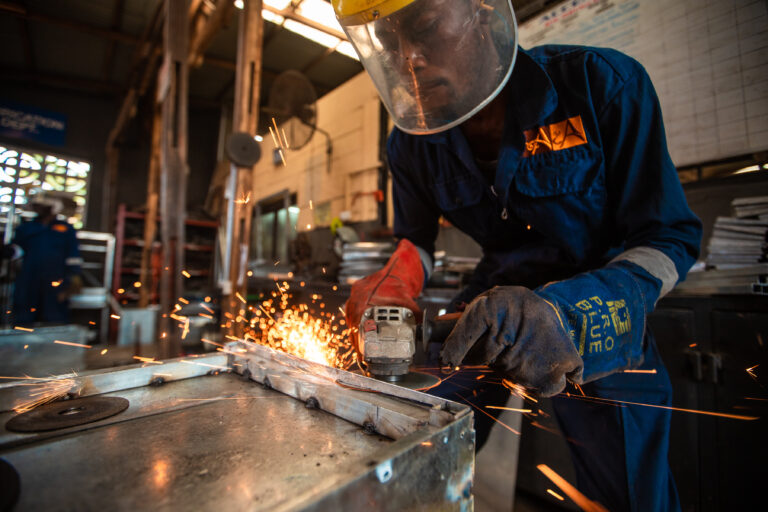
Wrought iron furniture is furniture forged by heating iron and shaping it by hand, rather than pouring it into a mould. It lasts for decades, can be repaired rather than replaced, and suits industrial, traditional, modern and eclectic interiors alike, which is why it has outlasted almost every furniture trend.
At a glance
- “Wrought” is the old past tense of “work”: the iron is worked by hand under heat.
- Most modern wrought iron furniture is forged mild steel, made with the same techniques.
- Wrought iron can be reheated and repaired; cast iron is more brittle and usually replaced.
- A good paint or powder coated finish protects it for years, even outdoors.
- It works across industrial, traditional, modern and eclectic interiors.
What is wrought iron furniture?
Wrought iron furniture is furniture made from iron that has been heated and worked by hand, hammered and bent into shape rather than poured into a mould.
The name comes from that process: “wrought” is simply the old past tense of “work”. Blacksmiths used it for centuries to make gates, railings, garden furniture and fittings, and the ornate scrollwork of Victorian and Georgian ironwork comes from how the metal curls and twists under heat.
Much of what is sold as wrought iron furniture today is technically mild steel, forged with the same techniques. The term has stuck because it describes the process and the look. It is the same forging work our wrought iron fabrication team does in Accra.
Wrought iron vs cast iron furniture
Wrought iron and cast iron are made in opposite ways, and that difference decides how long a piece lasts and whether it can be repaired.
| Wrought iron | Cast iron | |
|---|---|---|
| How it is made | Heated and shaped by hammering and bending | Melted and poured into a mould |
| Character | Slightly fibrous, with some flex before it fails | Harder but more brittle once set |
| Shapes | Shaped to a brief, one piece at a time | Intricate repeated shapes, produced cheaply |
| If damaged | Can be reheated, straightened, welded and refinished | A crack is hard to repair, so the piece is usually replaced |
Why does wrought iron furniture last so long?
Wrought iron furniture lasts because it is strong, protectable and repairable.
- Strength: forged metal holds weight in a way many furniture materials cannot, from a heavy garden bench to a staircase balustrade.
- Protection: finished correctly with paint or powder coating, it resists corrosion for years, even outdoors.
- Repairability: a damaged piece is usually a repair job, not a replacement.
- Character: a little patina on iron tends to add to it, where a scratched laminate surface only looks worn.
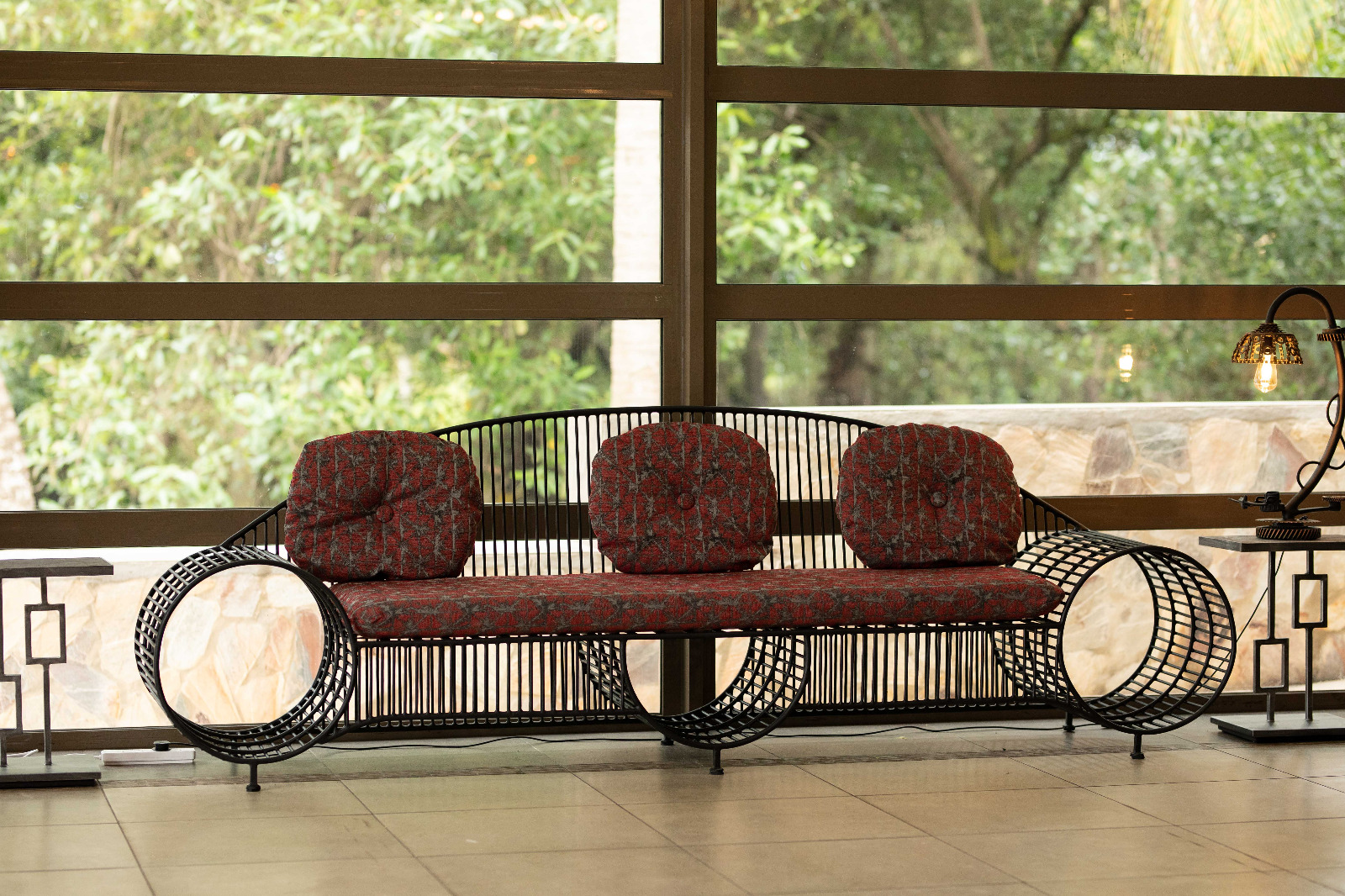
How to style wrought iron furniture in your home
Wrought iron works across more interior styles than it is usually given credit for, because it reads as a material rather than a fixed style.
| Interior style | How iron works in it |
|---|---|
| Industrial | The natural fit. Exposed brick, concrete and raw or blackened metal let a forged piece stand as a feature. |
| Traditional and classic | Ornate scrollwork and curved silhouettes echo the Victorian and Georgian originals, and pair well with wood tones and heavier fabrics. |
| Modern and minimalist | Clean lined iron in matte black gives a quiet contrast against pale walls and plain upholstery. |
| Eclectic and layered | Iron mixes easily with wood, cane, glass and planting, from a farmhouse kitchen to a plant filled sunroom. |
If you are unsure which direction suits your space, bespoke interior design in Accra helps you choose a piece scaled and finished for the room it goes into.
Where do custom wrought iron pieces make the difference?
A custom piece is measured for your actual space, while a catalogue piece is sized for an average room.
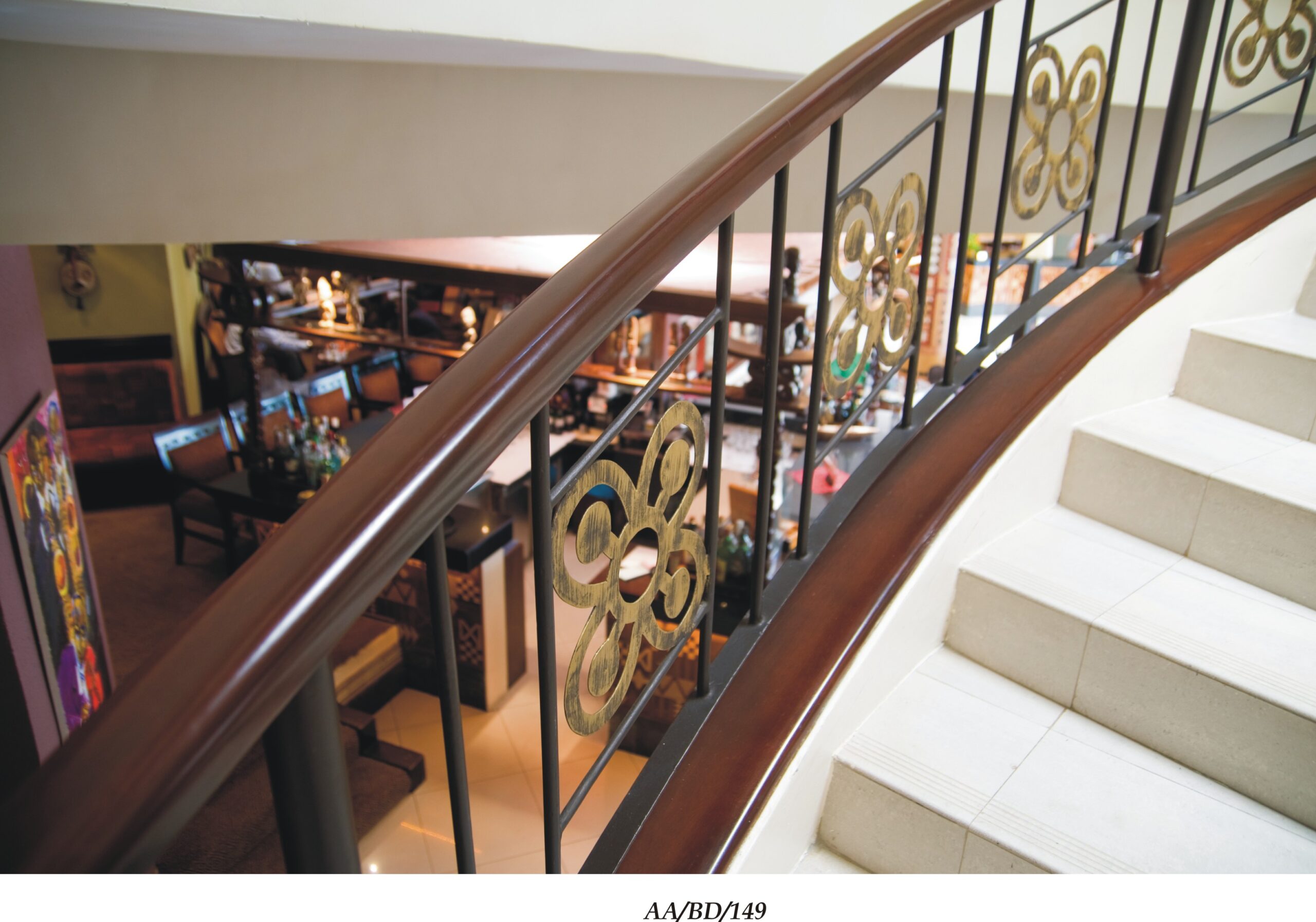
Custom work takes account of your ceiling height, your doorway width and the exact finish you want, whether that is a dining table base, a room divider, a staircase balustrade or a decorative screen. Forging suits this well, because a piece can be shaped to a brief rather than chosen from stock patterns.
How do you care for wrought iron furniture?
Wrought iron needs little care, as long as the finish is checked and kept up.
- Check the finish for chips or scratches, especially at legs and edges where knocks happen.
- Touch up any exposed metal before rust can spread under the paint.
- Wipe pieces down now and then so grit does not wear through the coating.
- Give outdoor pieces a more weather resistant finish than indoor ones. Our guide to powder coating vs spray painting compares the options.
How Accents & Art makes wrought iron furniture
At Accents & Art, wrought iron pieces are designed, forged, finished and installed by one team in our workshop in Accra, Ghana.
Each piece starts from a drawing sized to your room and the load it has to carry. The joints are welded to suit the piece, which our guide to MIG vs TIG welding explains, before it is finished for indoor or outdoor use.
Frequently asked questions
What is the difference between wrought iron and cast iron furniture?
Wrought iron is heated and shaped by hammering and bending, so it can be reheated and repaired. Cast iron is melted and poured into a mould, which makes it more brittle, so a cracked cast iron piece is usually replaced rather than repaired.
Is wrought iron furniture suitable for outdoor use?
Yes, as long as it has the right finish. A weather resistant paint or powder coated finish protects it from rain and sun for years, and any chips should be touched up before rust can spread.
Can damaged wrought iron furniture be repaired?
Usually, yes. Because it is forged, wrought iron can be straightened, welded and refinished after a knock, which is one of the main reasons it lasts for decades.
Does wrought iron furniture suit modern interiors?
Yes. Clean lined iron pieces in matte black work well in modern and minimalist rooms, giving a quiet contrast against pale walls and plain upholstery.
If you have a room in mind and want a piece designed to fit it exactly, start a commission and send us the space and the look you are after.