Good living room interior design in Ghana, whether you call it the living room, the lounge, the hall or the drawing room, starts with the climate. That means a layout that lets air move, materials that stay cool and wear well, and light that is soft by day and warm at night. Once those basics are right, furniture, colour and a few well chosen pieces of craft give the room its character.
At a glance
- Plan the layout around airflow, the main focal point and the way people move through the room.
- Natural materials such as hardwood, cane, linen and metal cope with heat and humidity better than heavy synthetics.
- Plan the TV wall and the ceiling early, because sockets, cables and lights have to go in before the walls are finished.
- Layer the lighting: a ceiling light, a lamp by the seating and one accent light.
- A few pieces made for the room do more than a lot of shop bought decor.
Where do you start with living room interior design?
Start with how the room is used, measure it properly, and plan the layout before you choose colours or buy furniture.
In many Ghanaian homes the living room, the hall in a chamber and hall house, is where guests are received as well as where the family relaxes, so seating for visitors matters as much as the television. Ask a few questions first: who uses the room, at what time of day, and for what? Is it mainly for watching television, for entertaining or for both?
Then measure the room, the windows and doors, the position of sockets and the ceiling fan. Draw it out, even roughly, and mark the focal point, which is usually the television wall, a large window or a feature wall. Leave walkways of around 75 to 90 cm between pieces of furniture so the room never feels like an obstacle course.
How do you design a living room for Ghana’s climate?
Design for airflow and shade first: keep windows and the path of the ceiling fan clear, choose breathable fabrics and hard wearing natural materials, and keep direct sun off the seating.
- Let the breeze through: avoid tall cabinets in front of windows, and place the main seating where cross ventilation actually reaches. Centre the ceiling fan over the seating rather than the room.
- Choose breathable fabrics: linen and cotton blends stay comfortable in humid weather, while leather and vinyl can feel hot and sticky in the afternoon.
- Keep floors cool: tiles and terrazzo stay cool underfoot. Use rugs to define the seating area, and pick ones that can be washed or beaten clean.
- Control glare: light curtains, blinds or a decorative screen soften harsh sun without blocking air. Cut metal screens are one way to shade a window and make it a feature at the same time.
- Plan for dust: during the harmattan, surfaces that wipe clean easily, such as sealed wood, metal and glass, save a lot of work.
Which living room interior design ideas suit Ghanaian homes?
The living room interior design ideas that suit Ghanaian homes best combine a calm base of pale walls and natural materials with one or two strong features, such as a statement piece of furniture, a sculptural screen or local art.
| Idea | Key materials | Colour palette | Works well for |
|---|---|---|---|
| Warm minimal | Hardwood, linen, one metal accent | Off white, sand and warm wood | Smaller rooms that need to feel calm and open |
| Afro-contemporary | Clean modern furniture with kente or adinkra inspired textiles, Bolga baskets and carved stools | Neutral walls with gold, terracotta and indigo accents | Families who want the room to feel rooted in Ghana without looking themed |
| Indoor and outdoor | Cane, rattan, plants, tiles that continue onto the veranda | Greens, natural fibres and white | Rooms that open onto a veranda or garden |
| Metal and wood | Wrought iron frames with timber tops, glass and leather details | Black, walnut and cream | Larger rooms and open plan living and dining spaces |
| Feature wall | Textured paint, timber slats or a metal art panel | One deeper colour on a shaded wall | Rooms with no natural focal point |
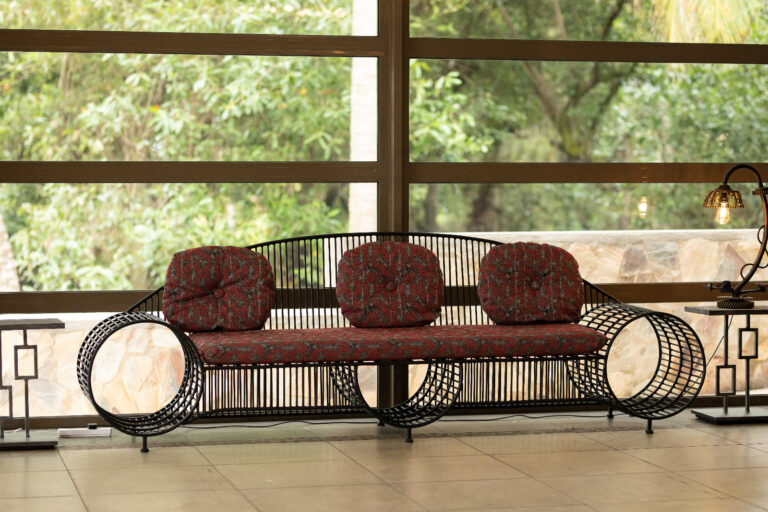
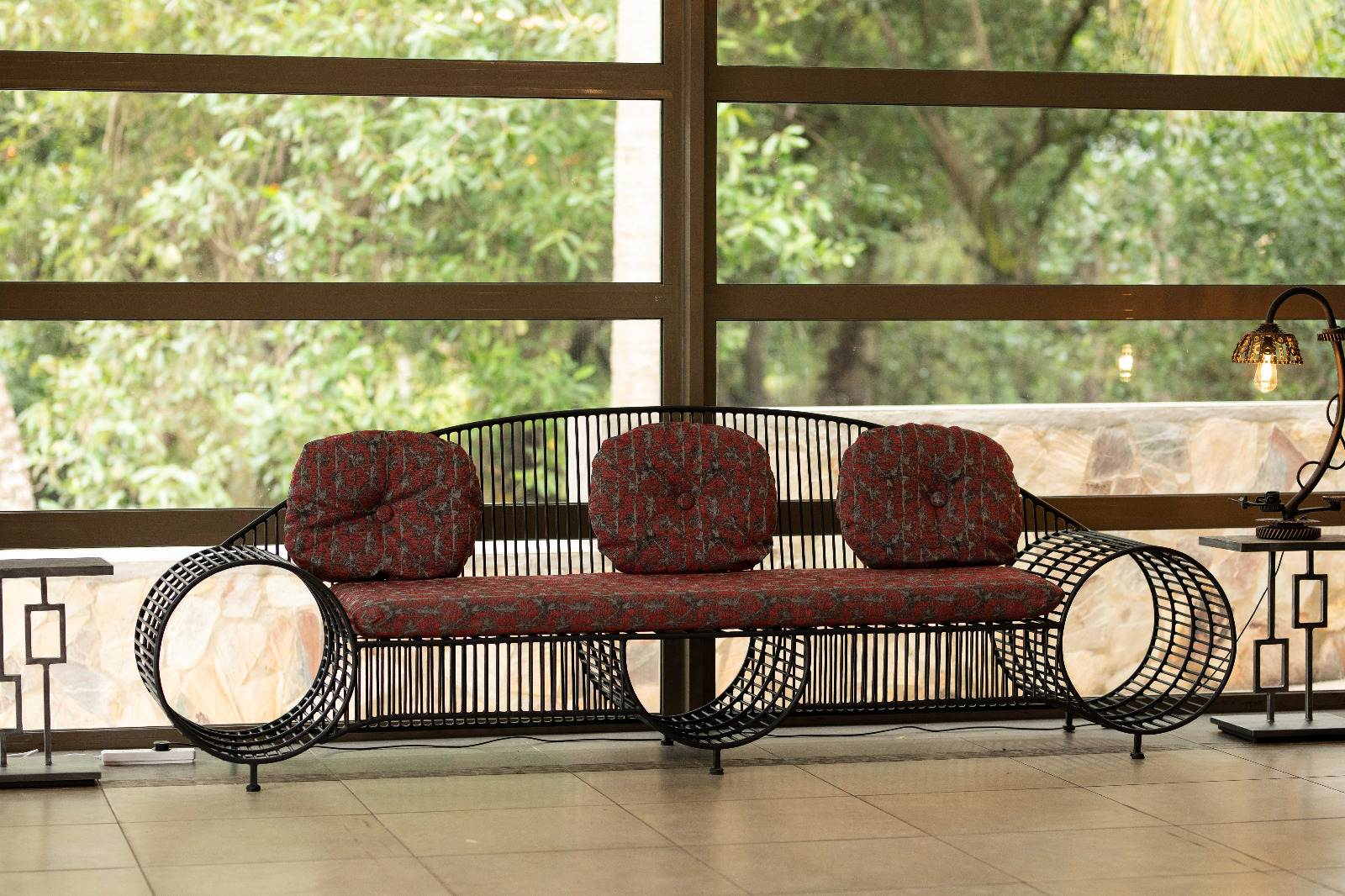
The metal and wood look is one of the most hard wearing, because forged frames can be repaired and refinished for decades. Our wrought iron furniture styling guide shows how it fits into modern, traditional and eclectic rooms.
TV wall design ideas for a living room
A good TV wall puts the centre of the screen at seated eye level, hides every cable, and keeps the screen out of the glare from windows.
- Height: the centre of the screen at roughly 1 m to 1.1 m from the floor suits most sofas. Mounting it high above a cabinet strains the neck.
- Distance: sit roughly one and a half to two and a half times the screen’s diagonal away, so a 55 inch screen suits seating about 2 to 3.5 m back.
- Hide the cables: plan sockets and a cable channel behind the screen before plastering, or run cables inside a timber or metal panel.
- Mind the windows: do not put the screen opposite a bright window, and do not put it on the wall the afternoon sun hits through the glass.
- Make the wall the feature: timber slats, stone or tile cladding, a floating console with open shelves either side, or a metal art panel framing the screen all turn a blank wall into the room’s focal point.
- Light behind the screen: a warm strip light behind the TV reduces eye strain in the evening and makes the wall glow.
A floating console or a low TV stand keeps the floor visible, which makes a small hall feel larger. If the wall needs built in shelving or a panel made to size, that is where made to measure joinery or metalwork earns its cost.
How do you choose furniture for a living room?
Choose furniture to fit the room and the way you use it: measure first, leave space to walk, and favour well made frames that can be reupholstered rather than replaced.
- Get the scale right: a sofa that fills about two thirds of the wall it sits against usually looks balanced. An oversized sofa in a small hall makes the whole room feel cramped.
- Plan seating for guests: if you often host family, combine a sofa with armchairs, a bench or stools that can move when more people arrive.
- Look at the frame, not just the fabric: a solid hardwood or metal frame outlasts several covers. When the fabric wears, you can restore the pieces you already own instead of buying new.
- Fill awkward spaces with made to measure pieces: alcoves, low windows and odd corners are where bespoke shelving, benches and tables earn their cost.
How should you light a living room?
Light a living room in layers: general light from the ceiling, task light from floor or table lamps beside the seating, and accent light on art, plants or a feature wall.
- General light: a ceiling light, pendant or fan with a light kit, ideally on a dimmer.
- Task light: a lamp beside each main seat for reading or phones.
- Accent light: wall lights, a lamp that throws patterned light, or a small spotlight on a piece of art.
- Warm bulbs: choose warm white bulbs (the box says 2700K to 3000K) for a relaxed room in the evening. Cool white suits kitchens and workspaces better.
- POP ceiling: a plaster of Paris ceiling is the usual home for recessed downlights and hidden strip lighting. One simple step or tray around the edge with a warm strip light looks modern for years; heavy moulded patterns date quickly and gather dust. Hang the fan and any heavy light fitting from the concrete slab above, not from the plaster.
- Plan for power cuts: one or two rechargeable or solar lamps keep the room usable when the power goes off.
A lamp can be a sculpture in its own right. Our handmade lamps and lighting include pieces made from upcycled bicycle chains and engine parts.

What are the best home decor ideas for a living room?
The best home decor ideas for a living room use fewer, larger pieces that mean something to you, group small items in threes, and leave some walls and surfaces empty.
- One large piece beats many small ones: a single large artwork, wall sculpture or textile hanging gives a wall more presence than a cluster of small frames.
- Mix textures: wood, metal, woven fibres and ceramics side by side make a neutral room feel rich.
- Bring in plants: a large plant in a corner softens hard lines and suits the indoor and outdoor feel of many Ghanaian homes.
- Anchor the seating with a rug: the front legs of the sofa and chairs should sit on it, so the group reads as one.
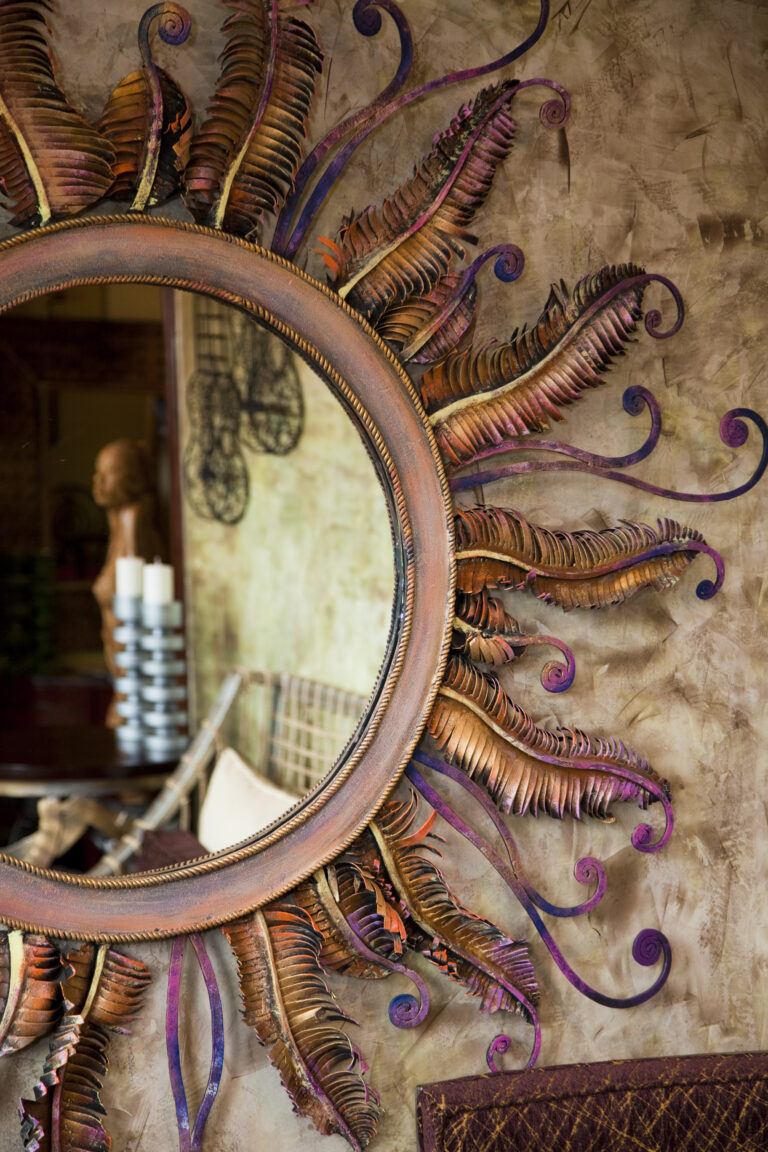
- Choose pieces with a story: handmade sculpture, candle holders and wall art from local makers age better than mass produced decor. Our shop carries handmade decor and accessories in metal.

How Accents & Art designs living rooms
Our designers work alongside our own welders, woodworkers and finishers in Bubuashie, Accra, so the furniture, screens and staircases in a room can be designed and made by one team.
A project starts with a consultation about the space, your style and how you live in it. That becomes a design with materials and dimensions for every bespoke piece, which is then made in our workshop in wrought iron, exotic hardwoods, cane or glass and installed. A designer is most useful when the room is large or awkward, when a whole house is being furnished at once, or when you want pieces made for the space. When you compare interior designers in Ghana, ask to see past concepts that became finished rooms, and ask whether the studio can make its own pieces or only buys them in.
Frequently asked questions
How can I make my living room look expensive on a budget?
To make a living room look expensive on a budget, clear the clutter first, then paint the walls a warm pale colour, hang curtains high and wide, and choose one larger rug. Spend on a single statement piece rather than many small ones. Layered lighting changes the room most for the least money.
What colours are best for a living room in Ghana?
The best colours for a living room in Ghana are warm pale neutrals such as off white, sand and soft stone, because they keep the room bright and feeling cool. Add colour through cushions, textiles, art and plants, or paint one shaded wall a deeper tone such as terracotta or indigo as a feature.
How do I arrange furniture in a small living room?
Arrange furniture in a small living room with fewer, well scaled pieces: a compact sofa and one or two chairs, a wall mounted television and furniture on raised legs so more floor shows. Keep walkways clear, and hang a mirror opposite a window to bounce daylight around the room.
Should I hire an interior designer or a carpenter?
Hire an interior designer when you need the whole room planned, and a carpenter when you already know exactly what you want made. A designer works out the layout, materials, lighting and furniture together. Many homeowners use both, with the designer drawing each piece and a carpenter or workshop making it.
If you are planning a living room and want pieces made for it, book a design consultation and tell us about the space and how you use it.