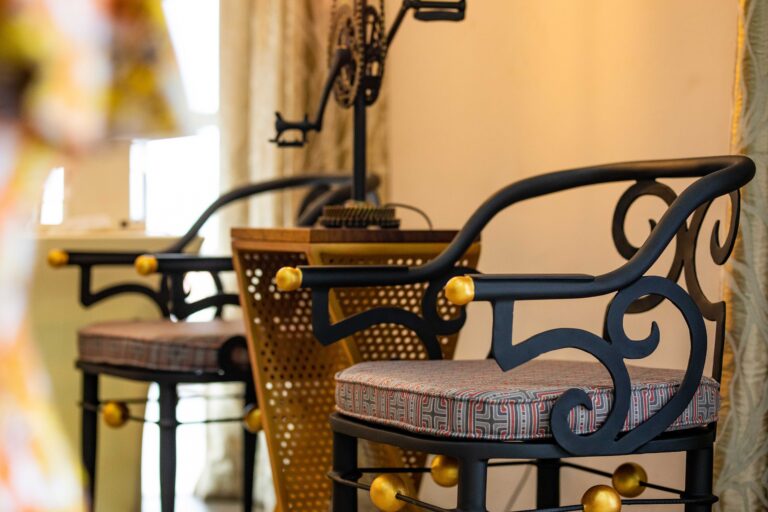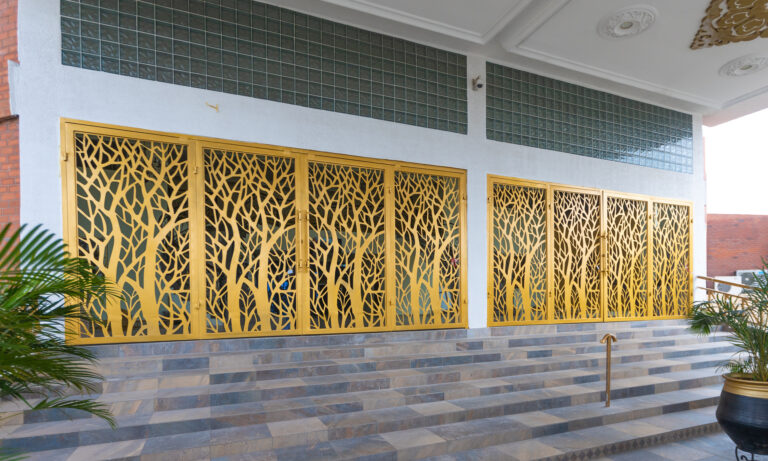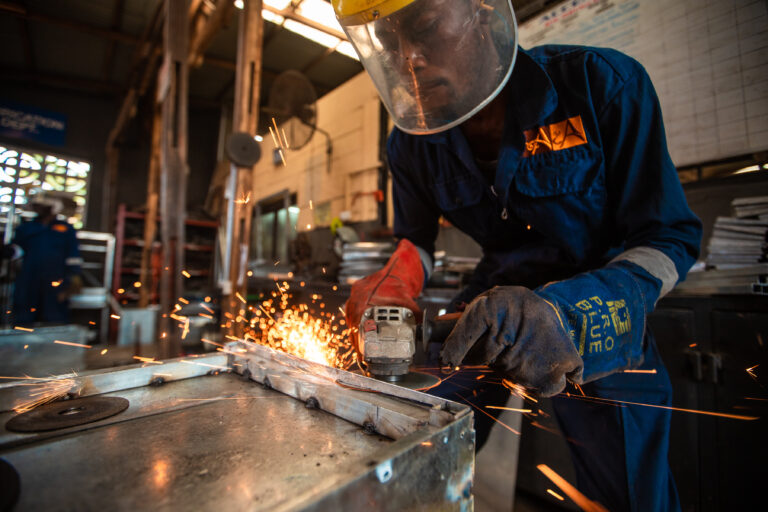
Powder coating applies a dry powder that is baked in an oven into one hard, fused layer, while spray painting applies liquid paint in thin coats that dry at room temperature. Powder coating is usually more durable outdoors; spray painting is more flexible for large fixed structures, on site touch ups and fine colour work.
At a glance
- Powder coating is a dry powder fused by oven heat. Spray painting is liquid paint built up in coats.
- Powder coating resists chipping, scratching and UV fading better than liquid paint.
- Spray painting is often cheaper upfront; powder coating often costs less over the life of an outdoor piece.
- Powder coating releases close to no VOCs, and overspray can often be reused.
- Spray painting suits fixed structures, on site touch ups and detailed multi colour work.
What is powder coating?
Powder coating is a finish in which a dry powder, a finely ground mix of resin and pigment, is sprayed onto metal with an electrostatic gun and then baked in an oven.
The electrostatic charge makes the powder cling to the earthed metal. In the oven, the powder melts and fuses into one continuous, hard coating. With no liquid carrier to evaporate, the finish forms as a single fused layer rather than several separate coats.
It is the finish most often chosen for outdoor metalwork, and it is covered by our spraying and finishing service in Accra.
What is spray painting?
Spray painting is a finish in which liquid paint, either solvent based or water based, is applied with a spray gun in thin coats.
Each coat dries or cures at room temperature or with mild heat. It is a familiar process, flexible on site, and it allows fine colour matching and detailed multi colour work, because coats can be masked and layered.
Powder coating vs spray painting: side by side
Powder coating wins on durability and environmental impact, while spray painting wins on upfront cost, flexibility and fine detail.
| Powder coating | Spray painting | |
|---|---|---|
| How it is applied | Dry powder, electrostatic gun, oven cured | Liquid paint, spray gun, air dried |
| Durability outdoors | Thicker fused layer that resists chips, scratches and UV fading | Thinner coat, more prone to chipping at edges and to fading |
| Upfront cost | Usually higher, because of the oven cycle | Often lower for a single item or small job |
| Long term cost | Needs reapplying far less often | May need more frequent maintenance |
| Finish options | Gloss, matte, textured and metallic, even on complex shapes | Fine colour blending and multi colour detail |
| Touch ups | Not possible on site | Easy to touch up or adjust |
| Environmental impact | Close to no VOCs; overspray often reused | Solvent paints release VOCs and more waste |
Which finish lasts longer?
Powder coating lasts longer on anything that lives outdoors.
Its thicker, fused layer resists chipping, scratching and UV fading considerably better than liquid paint, which is why it is the standard finish for gates, railings, balustrades and garden furniture exposed to Ghana’s sun and rain for years. Spray paint can look just as good on day one, but a thinner coat is more prone to chipping at edges and corners.
Spray painting still has a place: it is the practical option for large fixed structures that cannot go into an oven, and for touch up work on site after installation.
Which finish is more affordable?
Spray painting is usually cheaper upfront, while powder coating is often cheaper over the life of an outdoor piece.
For a single item or a small one off job, spray painting needs no oven cycle and can be set up quickly. Powder coating costs more at the start, largely because of the curing step, but it needs reapplying far less often, so the lower maintenance can outweigh the higher first invoice.
What about appearance and environmental impact?
Both finishes offer a wide range of looks, but powder coating is the cleaner process by a clear margin.
- Powder coating: gloss, matte, textured and metallic finishes, applied evenly across complex shapes with no runs or drips. Close to no volatile organic compound (VOC) emissions, and overspray can often be collected and reused.
- Spray painting: finer control for detailed, multi colour work and subtle colour blending, and easy to touch up. Solvent based paints release VOCs as they cure and produce more hazardous waste.
Which should you choose?
Choose powder coating for anything that lives outdoors long term, and spray painting for fixed structures, touch ups and fine detail.
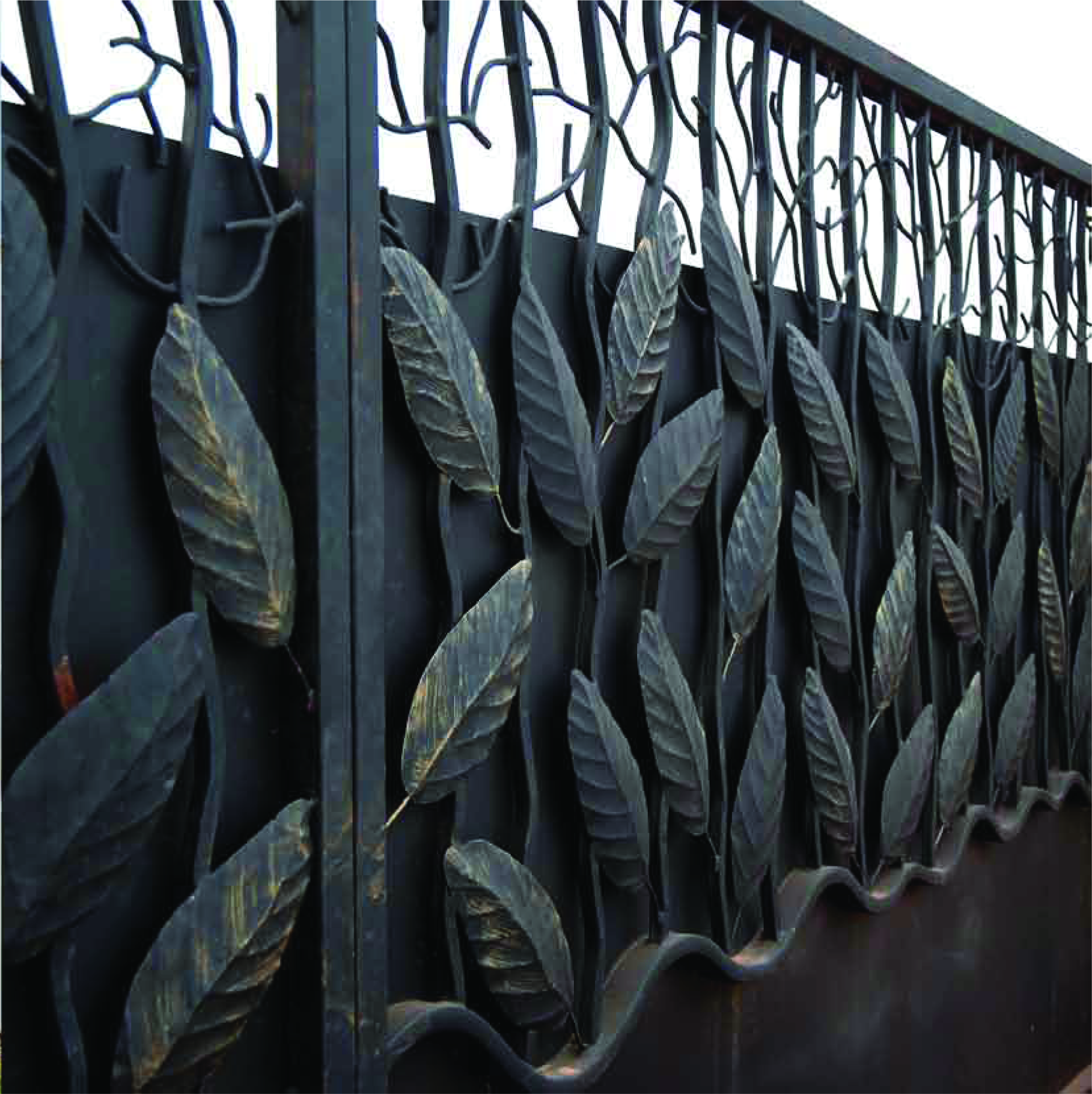
- Choose powder coating for gates, railings, balustrades and garden furniture, where durability and low maintenance matter more than upfront cost.
- Choose spray painting for large fixed structures that cannot be oven cured, for on site touch ups after installation, and where fine multi colour detail matters most.
The finish is the last stage of a piece, after it has been welded. Our guide to MIG vs TIG welding covers that stage, and our wrought iron furniture guide explains how to care for a finished piece.
How Accents & Art finishes metalwork
At Accents & Art, the finish is chosen with you at the design stage, as part of one in-house process that runs from concept and CAD design through fabrication, finishing and installation in our workshop in Accra, Ghana.
Deciding the finish early means the piece is fabricated with it in mind, and the finish matches where the piece will live, indoors or out.
Frequently asked questions
Is powder coating better than spray painting?
For outdoor metalwork, usually yes. Powder coating forms a thicker, fused layer that resists chipping, scratching and fading better than liquid paint. Spray painting is better for large fixed structures, on site touch ups and fine multi colour detail.
How long does powder coating last outdoors?
Powder coating lasts considerably longer outdoors than liquid paint, because its fused layer resists chipping and UV fading. How long exactly depends on the coating, the preparation of the metal and how exposed the piece is.
Can powder coating be done on site?
No. Powder coating needs an oven to cure, so pieces are coated before installation. Spray painting is the option for large fixed structures and for touch ups on site after installation.
Is powder coating more environmentally friendly?
Yes. Powder coating releases close to no volatile organic compounds, because there is no solvent, and overspray powder can often be collected and reused. Solvent based spray paints release VOCs and produce more waste.
If you are weighing up a finish for a specific piece, start a commission and send us the details, and we can talk through which option suits the job.