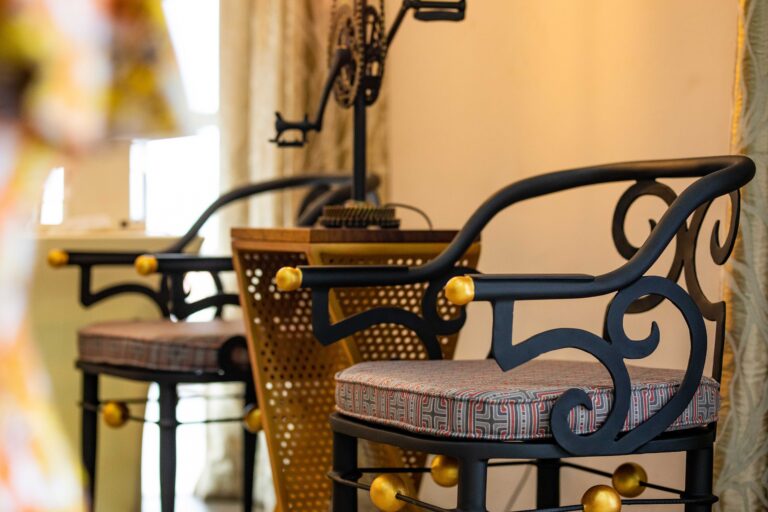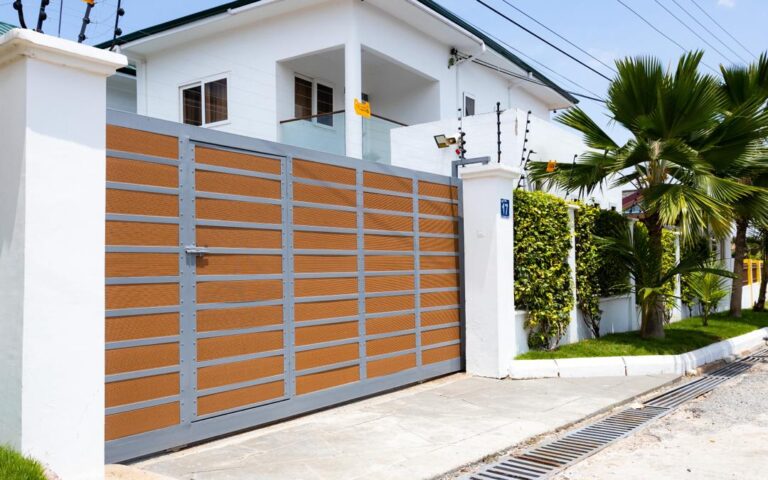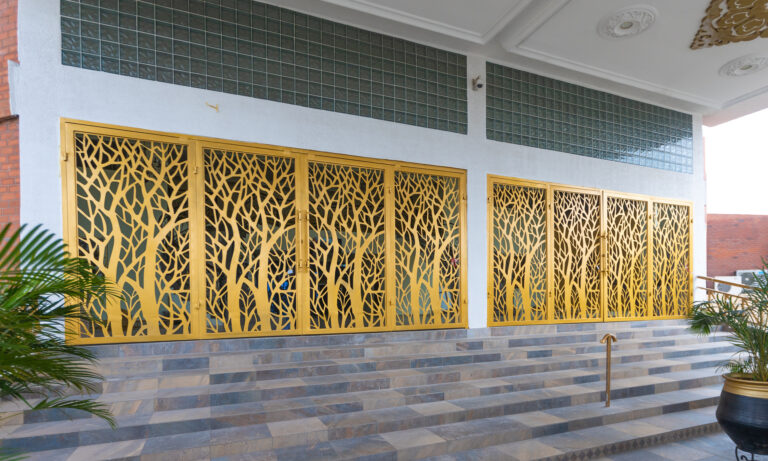
MIG welding feeds a continuous wire electrode and works quickly, which suits structural and larger scale metalwork. TIG welding uses a non-consumable tungsten electrode and a hand-fed filler rod, working more slowly but with far greater control, which is why it is chosen for fine, visible or decorative work.
At a glance
- MIG stands for metal inert gas welding. TIG stands for tungsten inert gas welding.
- MIG is faster and easier to learn. TIG is slower but gives a cleaner, more precise weld.
- MIG suits thicker structural steel. TIG suits thin sheet, stainless steel, aluminium and visible welds.
- Many commissions use both: MIG for the hidden frame, TIG for the visible detail.
- The process chosen affects both the price and the time a piece takes to make.
What is MIG welding?
MIG welding is a process in which a machine feeds a thin wire electrode continuously through a welding gun while an inert shielding gas, usually an argon blend, protects the weld from the air.
The wire melts to join the metal, and because it feeds automatically, the welder can move steadily along a joint without stopping to add material by hand. That makes MIG quick to work with and forgiving to learn.
It suits thicker sections of steel, structural frameworks and joints that will later be ground smooth, painted or hidden, such as the internal frame of a gate. Our welding and fabrication service uses it for exactly this kind of structural work.
What is TIG welding?
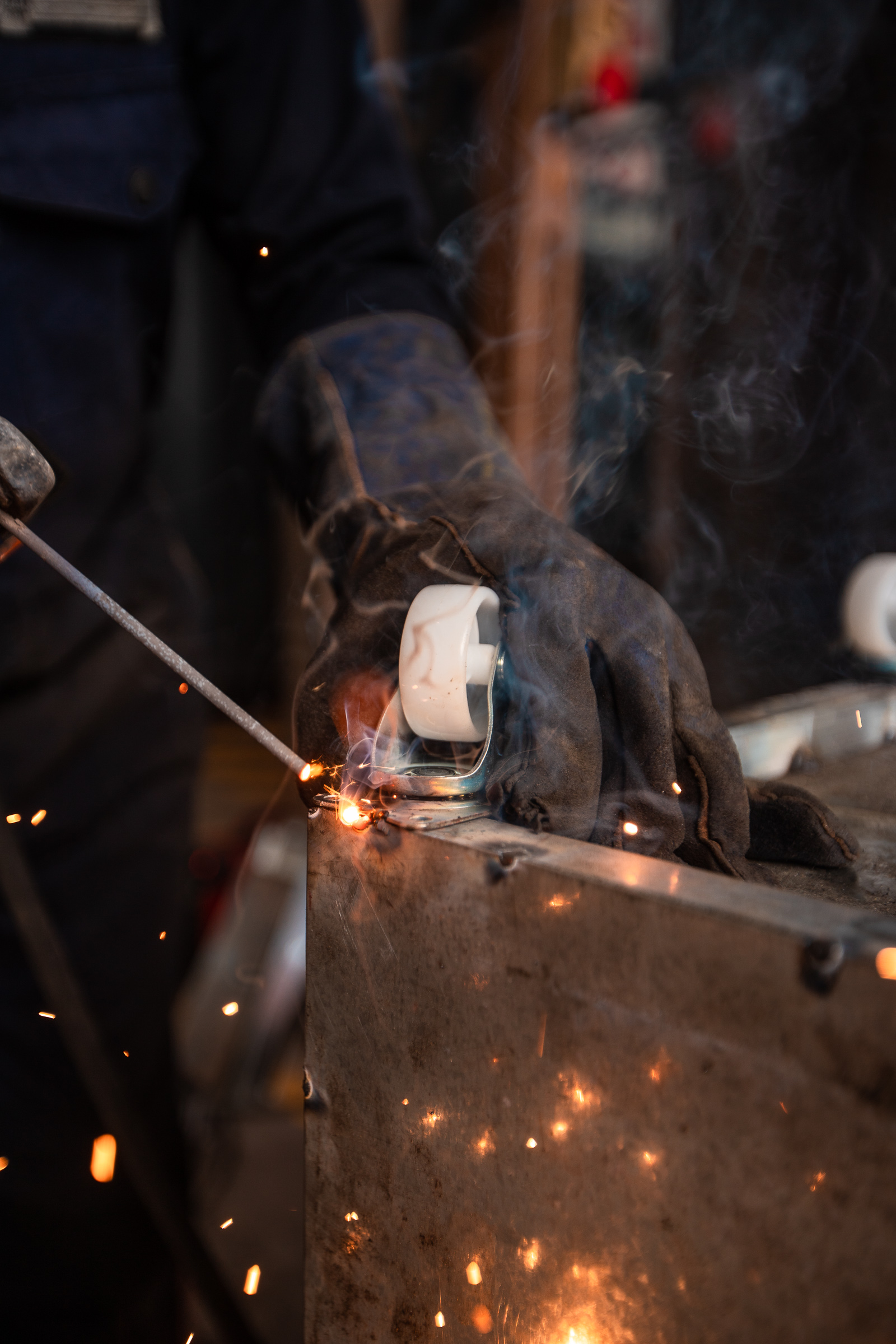
TIG welding is a process that uses a non-consumable tungsten electrode to create the arc, while the welder feeds a separate filler rod into the weld pool by hand.
The welder often controls the heat with a foot pedal at the same time, so it is a two handed process that asks for close attention throughout. That control costs speed, but it produces a cleaner, more precise weld with far less spatter and a finer finish.
TIG is the process most fabricators choose for thin materials, stainless steel and aluminium, and for any weld that will stay visible in the finished piece.
MIG vs TIG welding: the key differences
MIG and TIG pull in opposite directions: MIG trades finish for speed, and TIG trades speed for control and finish.
| MIG welding | TIG welding | |
|---|---|---|
| Electrode | Continuously fed wire | Non-consumable tungsten, with a hand-fed filler rod |
| Speed | Fast | Slower and more deliberate |
| Skill needed | Easier to pick up | More coordination and patience to master |
| Finish | Strong, but can look rougher | Neat and precise, often left exposed |
| Equipment | Wire feed unit, shielding gas and gun | Shielding gas, shaped tungsten electrode and usually a foot pedal |
| Best suited to | Thicker structural steel | Thin sheet, stainless steel, aluminium and decorative detail |
Both processes have their place. A good fabricator moves between them depending on what each part of the piece needs, rather than defaulting to whichever is quickest.
Which materials suit each process?
MIG handles thicker mild steel comfortably, while TIG comes into its own with thin sheet and metals that are harder to work.
- MIG: thicker mild steel, door and window frames, gate structures and hidden frameworks. It also tolerates metal that is not perfectly clean, which matters on site.
- TIG: thin sheet, stainless steel and aluminium. Its controllable heat is far less likely to warp thin sections or burn through delicate detail.
This is also why TIG is the natural choice for sculptural and decorative pieces, where the weld itself may be part of what you see.
How MIG and TIG are used in bespoke ironwork
A single commission often uses both processes, each on the part it suits best.
- Gates: the structural frame is joined with MIG for speed and strength, while fine scrollwork, decorative panels and visible joints are finished with TIG.
- Staircase balustrades: the uprights and handrail go together with MIG, while decorative infill, thin balusters and stainless steel detailing suit TIG.
- Sculpture and small decorative pieces: these lean on TIG throughout, because there is nowhere for a rougher weld to hide.
Once the welding is done, the finish protects it. Our guide to powder coating vs spray painting explains which finish suits an outdoor gate or railing.
How does the welding process affect cost and timeline?
The process a fabricator chooses affects both the price of a piece and how long it takes to make.
MIG is the more economical choice for structural work, because it needs less skilled labour time per metre of weld. TIG takes longer and demands more skill, which is why decorative and fine detail work costs more per hour of welding than structural framework.
A quote that uses MIG for the structure and TIG for the visible detail is often the best balance of cost, durability and finish. It is worth asking which process is proposed for which part of your piece.
How Accents & Art chooses between MIG and TIG
At Accents & Art, the welding process is chosen part by part once the design is fixed, as part of one in-house process that runs from concept and CAD design through fabrication, finishing and installation in our workshop in Accra, Ghana.
The approved CAD drawing shows which joints are structural and which will be seen, so the process for each is decided before any metal is cut, and you can ask about it at the design stage.
Frequently asked questions
What is the main difference between MIG and TIG welding?
MIG welding feeds a continuous wire electrode and is fast, which suits structural work. TIG welding uses a tungsten electrode and a hand-fed filler rod, which is slower but gives a cleaner, more precise weld for visible and decorative work.
Is TIG welding stronger than MIG welding?
Both produce strong welds when done well. The difference is mainly in control and finish rather than strength. TIG gives a neater weld on thin or visible work, while MIG is more efficient on thicker structural steel.
Which welding process is best for a gate?
Most gates use both. MIG joins the structural frame quickly and strongly, and TIG is used for fine scrollwork, decorative panels and any joints that stay visible in the finished gate.
Why does TIG welding cost more?
TIG is slower and needs more skill and concentration, so it takes more labour time per metre of weld. That is why decorative and detailed welding usually costs more than structural framework.
If you are planning a gate, balustrade or piece of custom ironwork and want to talk through which approach suits it, start a commission and tell us what you have in mind.